
Electronic Appliances
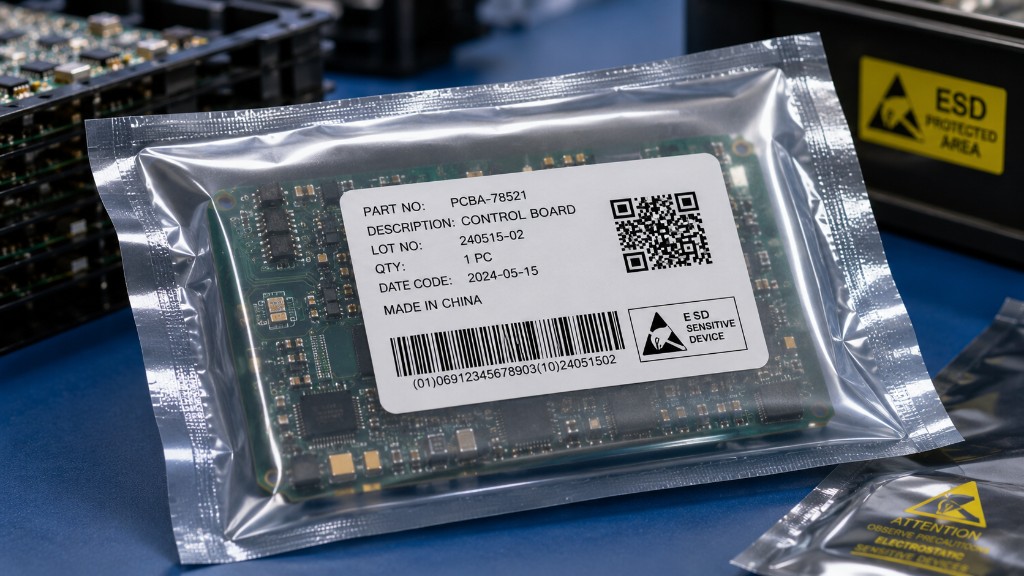
Household appliances and electronic products require labels displaying manufacturing information, component traceability, inventory details and consumer safety information. These labels are often applied early in assembly and must survive the remainder of the production process, testing and years of product use.
Common labelling challenges in electronics manufacturing
- Heat exposure during soldering, curing or product operation can degrade lower-grade ribbon prints.
- Compact, dense text — serial numbers, compliance marks (CE, RoHS, WEEE) and barcodes — requires sharp, high-resolution transfer.
- Long product lifespans mean warranty and rating-plate labels must stay legible for years, often in dusty or humid conditions.
- Assembly-line handling exposes labels to oils, solvents and abrasion before the product ever reaches the consumer.
Choosing the right ribbon formulation
For internal component labels, rating plates and warranty seals — typically printed on polyester or vinyl — a resin ribbon is recommended for its resistance to heat, chemicals and abrasion, ensuring compliance marks and serial numbers remain legible for the life of the product. For outer cartons and retail packaging printed on coated paper, a more economical wax-resin grade is usually sufficient.
Read more about how each ribbon grade performs on different substrates on our thermal transfer ribbon page.
Why electronics manufacturers choose Zhuoli Europe
We help manufacturers specify the right ribbon for each label type in the production process — from internal component marking to outer carton coding — keeping traceability intact from the factory floor to the end customer.
Key benefits
- ✓ Heat- and chemical-resistant print for internal component labels
- ✓ Sharp small-text and barcode printing for compliance markings
- ✓ Grades suited to synthetic nameplates and warranty labels
- ✓ Reliable performance through assembly-line handling and testing